Why we started with EV charging
ScalePath is not an EV company. Picking one category with real paperwork was the point.
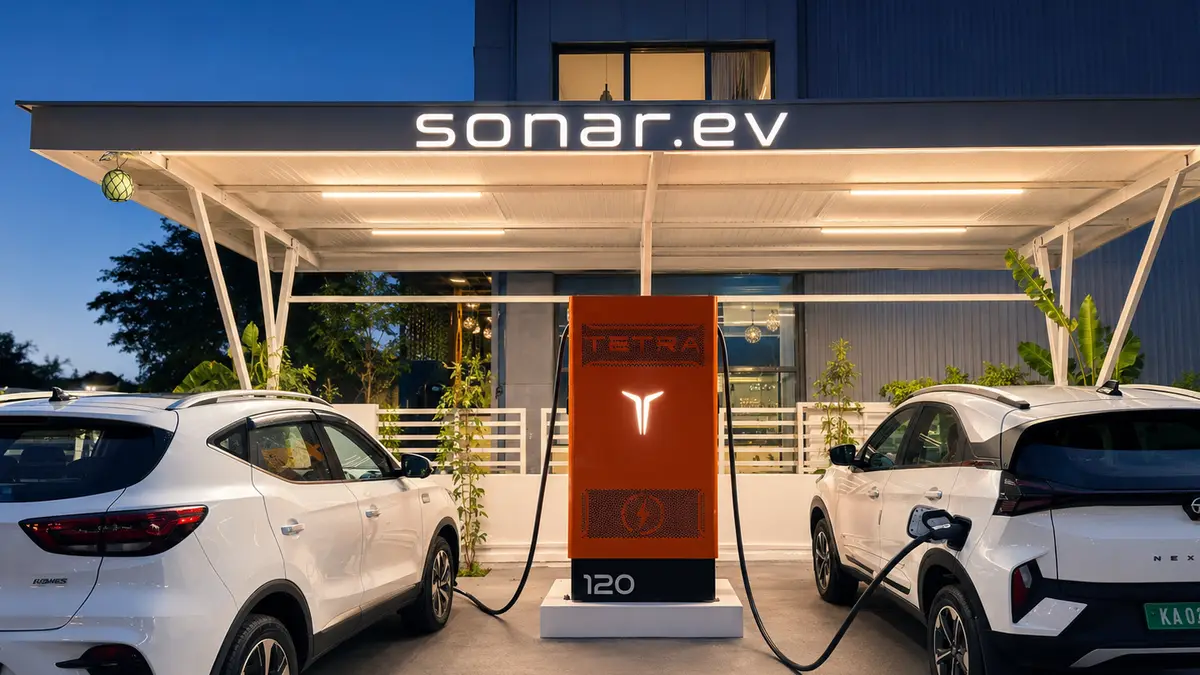
People assume ScalePath is an EV company. It is a fair assumption — the charging programme is the loudest thing we do — and it is wrong. ScalePath is a platform for turning an idea into something investable, and EV charging is one category running on it.
The interesting question is why we started there, and the answer is not that we have strong feelings about electric vehicles.
A platform with nothing on it is a demo
The generic version of this product is easy to describe and impossible to evaluate: bring us an idea, and we will help you make it investable. It is true, it is also what everyone says, and it can be built without ever meeting the part of the problem that actually bites.
Every category has a middle. Not the pitch and not the cheque, but the two hundred unglamorous steps between them — the survey, the sanctioned load, the approvals, the paperwork somebody has to physically chase. Software that only handles the beginning and the end is a nicer way to arrive at the same stuck place.
So we picked one category and built the middle of it.
Why this one
EV charging has a specific property that made it a good first choice: it is obstructed by exactly the things a platform can fix.
A landowner with a good site does not fail for want of ambition. They fail because they do not know whether the local transformer has spare capacity, cannot price the civil work, have never negotiated a revenue share, and have no idea which forms the DISCOM wants. Every one of those is a knowable thing that somebody has to do once and then can do repeatedly.
It also has a hard, physical outcome. A charger either exists and is delivering power or it does not. There is no version of this where everyone agrees the project went well and nothing was built. Categories with that property are useful to build on, because they will not let you lie to yourself about whether the system works.
What generalised, and what did not
The parts that carried over to everything else: the structured profile, the review queue, the document handling, the introductions, the ledger of who was told what and when.
The parts that did not: everything about the grid. Transformer capacity, sanctioned load and DISCOM procedure are not reusable insights about startups. They are EV facts, and they live in the EV category.
That split is roughly the whole architecture. A shared spine that does not know what a DISCOM is, and categories that carry their own domain. Adding land, or a franchise, or a manufacturing unit means writing the middle for that category — not rebuilding the spine.
What this means if you are not in EV
That the machinery you are using was tested against something that pushes back. The review queue has real applications in it. The document flow has moved real agreements. The introductions have been made to people who said no.
We would rather that than a platform that has only ever been used the way its authors imagined.
And the thing we say about funding holds in every category, including this one: we introduce, we do not promise. Building the middle of a category makes a project legible and unblocks the steps that were blocked. It does not make somebody else want to fund it. That part was never ours to guarantee.
ScalePath prepares founders and makes introductions. It does not guarantee investment, and no one on the platform will promise you one.